
Published June 21, 2026 • 7 min read • Telecom Insights
GPS/GNSS synchronisation is the primary source of absolute time for telecom networks worldwide — providing UTC-traceable time-of-day and frequency references to PTP Grandmasters, base stations, and core network elements. With 5G NR TDD requiring ±1.5 µs phase alignment, reliable GNSS reception is no longer optional — it is the foundational timing source upon which the entire mobile network depends.
Key Takeaway: A single GNSS satellite provides approximately 10–20 ns of timing accuracy. Modern multi-constellation receivers tracking 30+ satellites simultaneously achieve <±15 ns="" timing="" accuracy="">−12 at 1000 seconds — more than 100× better than required for 5G.
Multi-Constellation and Multi-Frequency Receivers
Modern telecom GNSS receivers support all four global constellations: GPS (US, L1/L2/L5), GLONASS (Russia, L1/L2), Galileo (EU, E1/E5a/E5b), and BeiDou (China, B1/B2/B3). Multi-constellation operation improves: availability (50+ visible satellites vs 8–12 for GPS-only), accuracy (reduced DOP through diverse geometry), and resilience (no single constellation failure). Multi-frequency (L1+L2/L5) receivers measure and compensate for ionospheric delay — the dominant GNSS error source — using the frequency-dependent dispersion of the ionosphere, achieving<5 ns="" accuracy="" without="" augmentation.="">
GNSS Antenna and Cable Considerations
The GNSS antenna is a critical and often overlooked component. Telecom-grade timing antennas use: choke-ring or multi-path rejection designs to suppress ground-reflected signals, LNA gain of 26–40 dB to overcome cable loss, and hemispherical coverage with gain roll-off at low elevation angles to reject multi-path. Antenna cable loss must be carefully budgeted — LMR-400 (~0.2 dB/m at 1.5 GHz) limits cable runs to ~50–100 m. For longer runs, fibre-optic RF-over-fibre links transport the GNSS signal from the antenna to the receiver with negligible loss.
Holdover and Oscillator Technologies
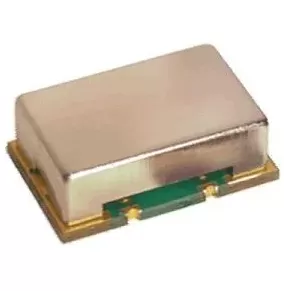
GNSS outages — from antenna damage, jamming, or solar activity — are inevitable. The holdover oscillator bridges these outages. TCXO (Temperature-Compensated Crystal Oscillator) provides<1.5>OCXO (Oven-Controlled Crystal Oscillator) — the standard for telecom — achieves<1.5>Rubidium atomic oscillators deliver<100 24="" ns="" drift="" over="" hours="" and="">Chip-scale atomic clocks (CSACs) bring rubidium-level stability to a 17 cm³ package.
Anti-Jamming and Anti-Spoofing
GNSS signals at the Earth's surface are extremely weak (−130 dBm for GPS L1 C/A) — easily overpowered by inexpensive jammers. Telecom GNSS receivers incorporate: CRPA (Controlled Reception Pattern Antenna) arrays that form spatial nulls toward jammers, IMU integration (inertial navigation) for jammed-environment holdover, spoofing detection (monitoring signal power anomalies, time jumps, and constellation inconsistencies), and OS-NMA (Galileo Open Service Navigation Message Authentication) for cryptographic authentication of the navigation message. Regulatory bodies (FCC, Ofcom) increasingly mandate anti-jamming capabilities for critical infrastructure timing receivers.
GNSS-Denied Timing: Alternatives
For indoor small cells and urban canyons where GNSS is unavailable, alternatives include: PTP-only timing distribution from a remote GM (G.8275.1/2), ePRTC (enhanced Primary Reference Time Clock) — a caesium-based autonomous time source accurate to ±30 ns over 14 days without GNSS, NTP for less stringent applications (1–10 ms accuracy), and terrestrial radio (eLoran, terrestrial beacon systems operating at 100 kHz) as a backup to GNSS. The industry trend is toward augmented GNSS — combining GNSS with PTP and local atomic references for multi-layer timing assurance.
GNSS synchronisation remains indispensable for telecom networks, but increasing reliance demands investment in resilience — multi-constellation receivers, anti-jam antennas, extended holdover, and diverse timing sources — to protect the critical infrastructure that underpins modern digital society.