

An RF program rarely breaks because one part is late. It breaks because the parts, the boards and the assembly were bought from four different places, each with its own lead time, its own paperwork and its own idea of when the build can start. By the time the last delivery lands, the schedule has already moved twice and nobody can point to a single document that covers the whole chain.
Consolidating an RF supply route is not about a catalogue. It is about one qualification standard applied to every line on the BOM, one traceability chain from the reel to the finished assembly, and one schedule that reflects the real bottleneck instead of the fastest line item.
Where a fragmented RF supply chain costs money
RF programs have a habit that general electronics does not: the part, the laminate and the assembly process are tied together. Change a filter, an amplifier or a connector and the matching network, the stackup and the test plan may all move with it. Split that work across suppliers and the interfaces become the schedule.
| Area | Split supply route | Consolidated route |
|---|---|---|
| Lead time | Each supplier reports its own, the build date is the last one to arrive | One committed date per build, with the critical line named |
| Traceability | Reel labels and lot records live with different vendors | One record per build from incoming material to shipped assembly |
| Verification | Each vendor applies its own incoming inspection rules | One incoming standard, X-ray reel counting and package checks on outside channel lots |
| Process fit | The board supplier does not know the assembly process | Boards are quoted against the assembly and test plan that will use them |
| Engineering changes | One change, several suppliers to notify, several chances to miss one | One change note, one approval, one revision held by the same team |
| Paperwork | Several certificates, several shipment documents, several duty lines | One shipment document set, DAP, DDP or FOB as required |
What consolidation does not mean
It does not mean every line has to come from one brand or one source. RF programs need specific devices, and forcing a substitute to keep the order tidy is the fastest way to lose performance. The parts stay as specified. What changes is who holds the qualification, the records and the schedule for them.
It also does not mean every board is built the same way. A low loss RF layer and a standard FR-4 control section have different process windows, and they are still quoted together, because the build date depends on both.
How SUPERB PCBA runs a consolidated RF supply route
Send the BOM and the build date, plus the board details if the boards are part of the same order. The reply covers the full scope in one place: component availability with date codes, the laminate and stackup position, the assembly route, and the test sequence, quoted against one delivery date. Where a line is short, the options are listed with their differences rather than hidden in a lead time column.
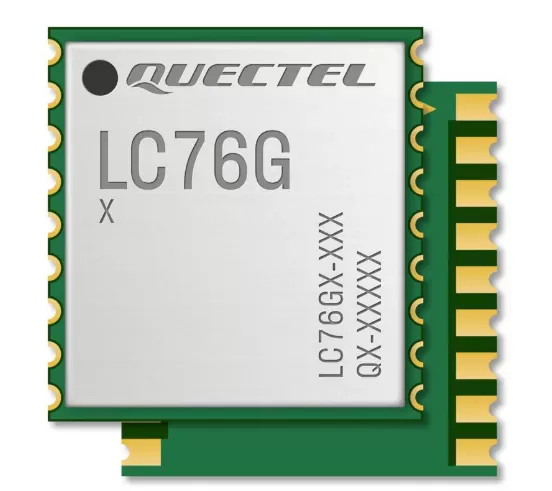
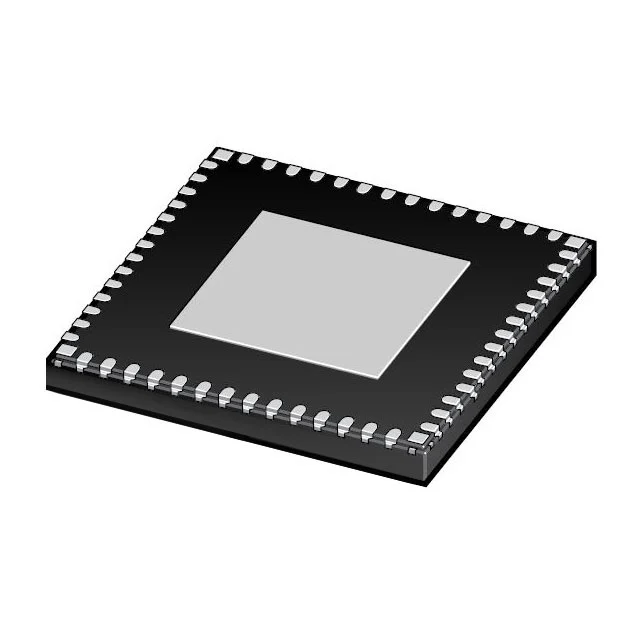
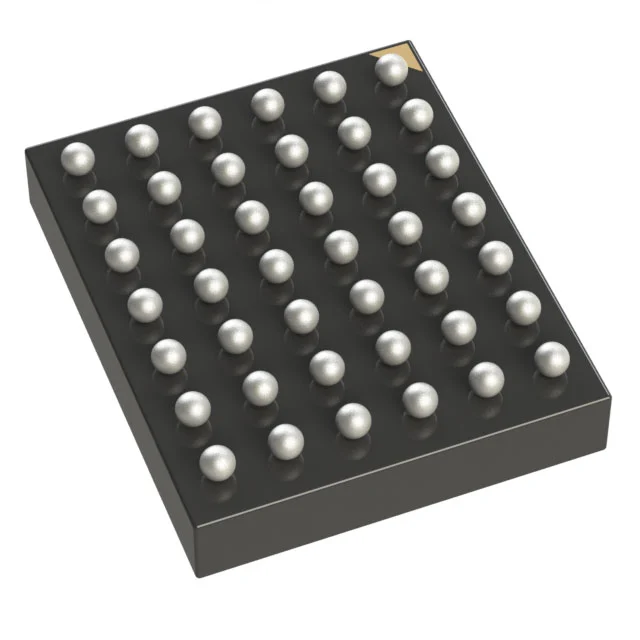
On the component side, RF programs are supported with devices from the frequency chain up to 77 GHz, including oscillators, mixers, amplifiers, filters, connectors and passive parts, with X-ray reel counting and package inspection on material from outside the normal channel and a 730 day warranty on verified lots. Where a part is obsolete, the last time buy position and the nearest equivalents are quoted together so the decision can be made in one pass.
On the board side, panels are supported from 500 MHz to 77 GHz with lines down to 0.05/0.05 mm and up to 68 layers, impedance held to plus or minus 5 percent, Rogers RO4003C, RO4350B and RO4835 plus Taconic RF-35, TLY-5 and CER-10 available through established supply channels, and RF plus FR-4 hybrid stackups where the control section needs a cheaper dielectric. Back drilling keeps the stub below 0.25 mm, and every panel carries a TDR impedance coupon.
SUPERB Assembly then runs the build with fine pitch SMT down to 01005, 3D SPI, 3D AOI, X-ray inspection in 2D and CT mode with voiding below 5 percent, ICT and functional test on customer approved fixtures, under IPC-A-610 Class 2 and Class 3, ISO 9001, and ISO 13485 for medical programs. SUPERB Tech holds the same records across the component, board and assembly steps, so a customer audit follows one trail instead of three.
Background reading: the component sourcing and supply overview, RF component sourcing, the RF and microwave device range, and RF and microwave assembly.
One stop RF supply questions
Can the boards and the components be quoted together?
Yes, and that is usually where the schedule saving comes from. The board quote is built against the assembly and test plan, so a stackup change cannot quietly add a week after the order is placed.
Do you hold stock for a repeat build?
Where a program has a forecast, a buffer can be planned on the long lead and single source lines, and it is reported as a stock position rather than a promise. Program buffers are agreed line by line with the customer.
What happens when a specified part cannot be found?
The proposal names the nearest alternative and the differences that matter, or the last time buy option. Nothing is substituted without written approval from your side.
Is a single source of supply a risk?
It is a risk if the supplier is not transparent. That is why every build carries its own record set and why the shortage list is shared with the customer while the order is live, not after the delivery date moves.
Next step
Send the BOM, the build date and the board details. You get one quoted scope covering components, boards, assembly and test, with the critical lines named and the options for each of them written out.