
Understanding Global Component Supply Chains: Direct vs Distribution
How the global electronic component supply chain works and how to choose the right sourcing strategy
The Structure of the Component Supply Chain
The electronic component supply chain is a multi-layered network connecting semiconductor manufacturers to end users. Understanding this structure is essential for making informed sourcing decisions.
At the top are the manufacturers — companies like Texas Instruments, Analog Devices, and STMicroelectronics who design and fabricate semiconductors. Below them are trusted distributors — Arrow, Avnet, Future Electronics, Digi-Key, and Mouser — who have direct purchasing agreements with manufacturers and provide inventory, logistics, and technical support. Then there are independent distributors and brokers, who trade in the open market without manufacturer authorization.
Each layer serves a different purpose. trusted distributors provide reliability and traceability but may have limited stock of older or niche parts. Independent distributors provide access to scarce and obsolete parts but with higher authenticity risk.
Direct Sourcing vs Distribution
| Direct Sourcing | trusted Distribution | |
|---|---|---|
| Best for | Large OEMs, million-unit volumes | Small to mid-size, flexible demand |
| Pricing | Lowest per-unit cost | Tiered volume discounts (20–40%) |
| Minimum order | Often millions of dollars | No minimum — buy what you need |
| Inventory | Lead-time-driven production | Stocked, immediate availability |
| Traceability | Direct from fab | Documented chain of custody |
| Flexibility | Low — long-term commitments | High — change mix and volume anytime |
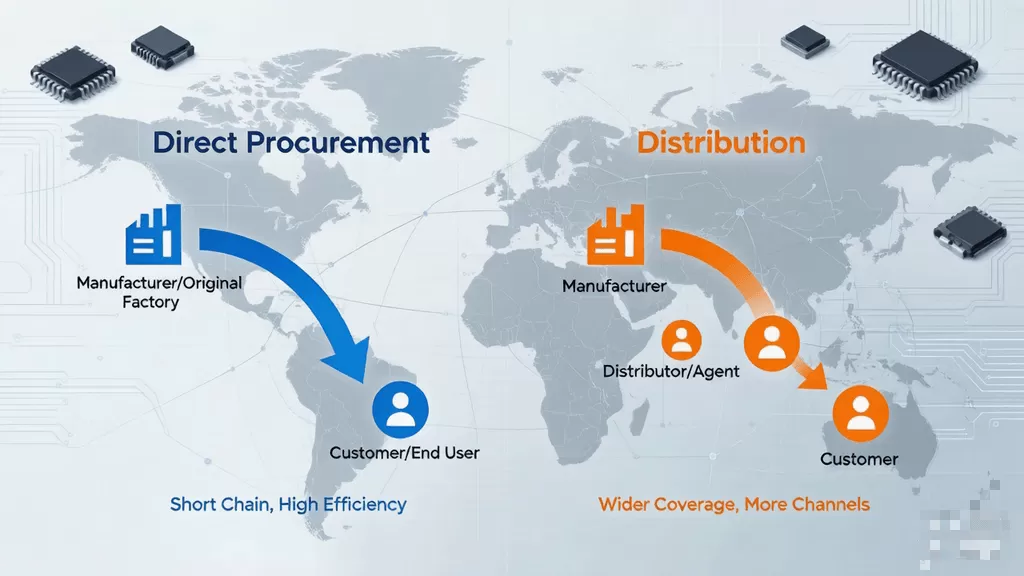
Large OEMs — companies building millions of units annually — often negotiate directly with component manufacturers. This "direct" model provides the lowest pricing and guaranteed allocation but requires minimum purchase commitments that can run into millions of dollars.
For small and mid-size manufacturers, direct sourcing is rarely feasible. trusted distribution provides a more practical model: no minimum order requirements, stocked inventory for immediate delivery, and technical support from supplier application engineers.
Regional Differences in the Global Supply Chain
The component supply chain is regionally structured. Asian distributors typically have the strongest relationships with Asian semiconductor manufacturers and shorter lead times for Asia-Pacific customers. North American and European distributors have advantages in their home regions for logistics, support, and regulatory compliance.
Smart component sourcing leverages these regional differences. A part that is on allocation in North America may be readily available through an Asian supplier — or vice versa. Global sourcing capability provides access to inventory across all regions.
How Superb Automation Fits In
Superb Automation operates as a consolidated procurement partner, combining the advantages of multiple distribution channels into a single point of contact for our customers. Our 7,000+ channel relationships span trusted distributors, regional specialists, and carefully vetted independent sources — giving our customers access to global component availability without managing multiple supplier relationships.