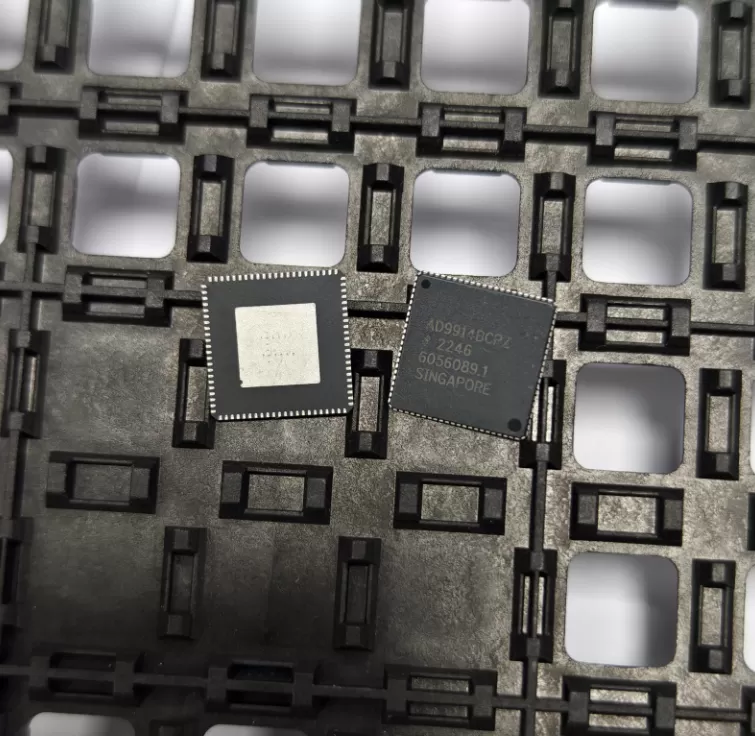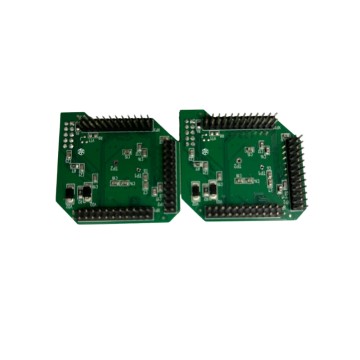

The classification and handling of moisture sensitivity for Printed Circuit Board Assemblies (PCBAs) during manufacturing is a critical process control parameter, directly tied to the prevention of popcorning, delamination, and internal cracking during solder reflow. Unlike individual components, a PCBA presents a composite structure where the moisture absorption characteristics are influenced by the board substrate, the solder mask, the components themselves, and any underfill or conformal coating materials. Proper classification ensures that appropriate baking, dry storage, and handling procedures are implemented to maintain assembly yield and long-term reliability.
Defining the PCBA Moisture Sensitivity Level
The Moisture Sensitivity Level (MSL) for a PCBA is not a single, universally fixed value but is determined through a combination of the constituent materials' properties and empirical testing. The most critical factor is often the most moisture-sensitive component on the assembly. If a component with an MSL 3 rating is mounted, the entire assembly's handling may need to adhere to MSL 3 conditions unless proven otherwise. The PCB substrate material itself has a hygroscopic nature; standard FR-4 absorbs moisture, which can vaporize during reflow, potentially causing blistering under the solder mask or compromising plated through-holes. Therefore, the PCBA's effective MSL is typically defined as the stricter level between its most sensitive component and the inherent sensitivity of the bare board after its own exposure history.
To establish a formal MSL, preconditioning testing per standards like IPC/JEDEC J-STD-033 is conducted. This involves exposing populated or unpopulated boards (depending on the test goal) to a controlled humidity environment (e.g., 60°C/60% RH) for a specified duration, followed by a simulated reflow profile. Post-reflow, the assemblies undergo visual inspection under magnification and electrical testing. More rigorous analysis may include scanning acoustic microscopy (CSAM) to detect subsurface delamination or cracks. The highest level of humidity exposure that the assembly can withstand without failure determines its classified MSL and corresponding floor life.
Implications for Manufacturing Process Flow
Once a PCBA's MSL is classified, it dictates stringent controls throughout the manufacturing workflow. The core parameter is the "floor life"—the maximum time the assembly can be exposed to ambient factory conditions (typically <30°C/60% RH) between being removed from a moisture-barrier bag and undergoing the reflow soldering process. For an MSL 2A assembly, this might be four weeks, while for an MSL 3 assembly, it is only 168 hours (one week). If the floor life is exceeded, the PCBA must be baked in a dedicated, forced-convection oven to drive out absorbed moisture before it can be sent through reflow. Baking profiles are carefully controlled to avoid damaging temperature-sensitive components; a common low-temperature bake is 90°C for 24-48 hours.
This classification forces a just-in-time manufacturing discipline. Kitting operations, manual assembly stations, and pre-reflow inspection queues must all be scheduled within the allowed floor life window. Assemblies awaiting processing beyond a few hours are often stored in dry cabinets maintaining low humidity (e.g., <10% RH). The entire process, from bag opening to reflow, is tracked, often using humidity indicator cards inside the dry storage or logged in a manufacturing execution system (MES). For double-sided or sequential reflow processes, the most restrictive MSL applies to the first reflow pass, and the clock may reset if the assembly is properly baked and re-bagged between cycles.
Special Considerations for Complex and Coated Assemblies
Advanced assemblies introduce additional layers of complexity. Boards with large, thick cores or multiple layers absorb and release moisture more slowly, potentially requiring longer baking times. The presence of moisture-sensitive devices like BGAs, QFNs, or chip-scale packages (CSPs) on both sides of the board makes the assembly highly vulnerable. Here, the MSL is effectively that of the most sensitive device, and the reflow profile for the second side must account for any residual stress from the first pass. For assemblies that will receive conformal coating or potting, the MSL handling applies up until the coating is fully cured. A critical step is a mandatory pre-coating bake. Even if within floor life, baking (e.g., 125°C for 2-4 hours) is required to remove all traces of moisture trapped under components. If not removed, this moisture can become sealed in by the coating, leading to latent corrosion or electrochemical migration failures in the field, negating the protective purpose of the coating.