
Transmit/Receive Module Technology: The Heart of AESA Radar
The transmit/receive (T/R) module is the heart of every active electronically scanned array (AESA) radar. Each module is a complete radar transceiver in miniature, containing a high-power transmit amplifier, a low-noise receive amplifier, phase and amplitude control, switching, and digital control. In a modern AESA, thousands of these modules operate in perfect synchrony, each contributing a precisely controlled amplitude and phase to the array’s transmitted and received beams. The performance, cost, and reliability of the T/R module define the performance, affordability, and availability of the radar system. This article examines the technology and design of T/R modules.
Module Architecture
A typical T/R module follows a common-leg architecture where the transmit and receive paths share components to minimize size and cost. From the antenna port inward: a circulator or T/R switch directs the signal path; the transmit chain consists of a driver amplifier, power amplifier, and possibly a harmonic filter; the receive chain consists of a limiter, LNA, and gain stages; and a common-leg core chip provides phase shifting, attenuation, and additional switching. A digital serial interface (typically SPI or a custom protocol) provides module control.
The circulator is particularly challenging to integrate. Ferrite circulators in microstrip or stripline implementation are inherently narrowband, typically covering 10–20% fractional bandwidth. For wideband arrays, switched T/R architectures using PIN diode or FET switches replace the circulator, trading insertion loss for bandwidth. The switch must handle the full transmit power while maintaining low loss in the receive path.
GaN Power Amplifiers
Gallium nitride high-electron-mobility transistors (GaN HEMTs) on silicon carbide substrates have revolutionized T/R module capability. Compared to the GaAs technology they largely replaced, GaN offers five to ten times higher power density, enabling higher output power from smaller die, and higher operating voltage (28–50 V vs. 5–10 V for GaAs), simplifying power supply design. GaN’s higher efficiency (40–55% power-added efficiency vs. 25–35% for GaAs) reduces heat dissipation, a critical advantage in the dense module packaging of AESA arrays.
The design of a GaN power amplifier MMIC for T/R module application involves careful trade-offs among output power, efficiency, bandwidth, and linearity. Class-AB biasing provides a balance of efficiency and linearity, while Doherty and envelope-tracking architectures push efficiency higher for waveforms with high peak-to-average ratios. Harmonic tuning networks shape the voltage and current waveforms at the transistor to maximize efficiency at the fundamental frequency.
Silicon Core Chips
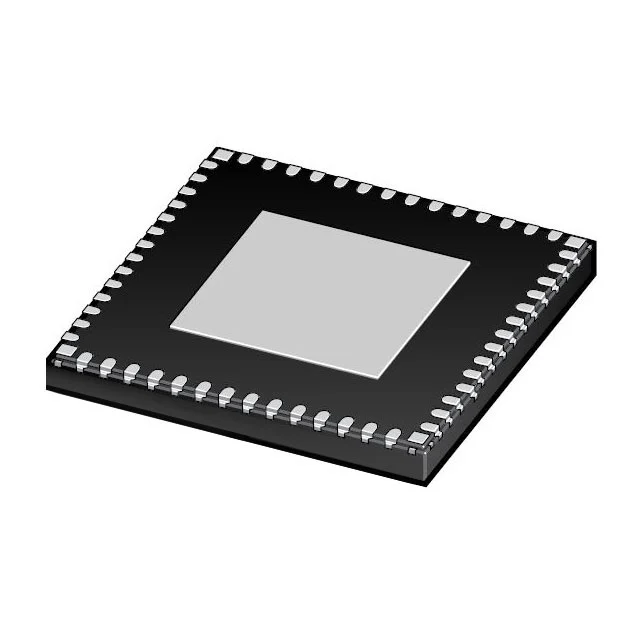
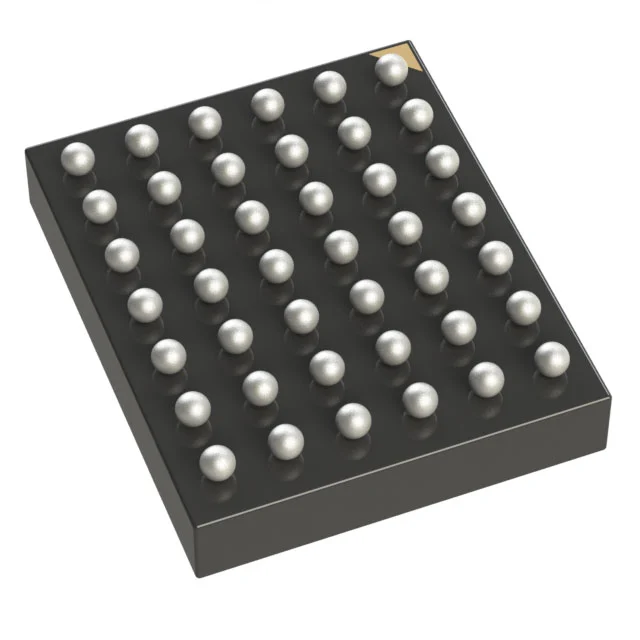
The core chip provides the common-leg functions of phase shifting, attenuation, and switching. While early core chips used GaAs technology, the trend is toward silicon germanium (SiGe) BiCMOS, which offers lower cost per function and enables integration of the digital controller on the same die. Advanced core chips integrate 6-bit phase shifters (<1° RMS phase error), 6-bit attenuators (<0.5 dB RMS amplitude error), T/R and polarization switches, temperature sensors, and memory for calibration data — all on a single silicon die typically 3–5 mm on a side.
Phase shifter architecture directly impacts module performance. Switched-filter and vector-modulator topologies provide the best combination of bandwidth, accuracy, and insertion loss. Digital step attenuators using switched resistive pi- or T-networks provide monotonic amplitude control with low phase variation across attenuation states — an important characteristic for maintaining beam pointing accuracy during amplitude tapering.
Manufacturing at Scale
Producing T/R modules in quantities of thousands to tens of thousands per radar system demands manufacturing disciplines more akin to automotive or consumer electronics than traditional defense production. Automated assembly using pick-and-place machines, automated wire bonding, and automated RF testing achieve the throughput required while maintaining consistency. Statistical process control monitors critical parameters, and acceptance testing verifies that every module meets its specifications across frequency, temperature, and drive level.
Cost reduction has been the primary driver of T/R module evolution over the past two decades. Module costs have decreased from thousands of dollars per element to hundreds, enabled by GaN-on-SiC wafer scaling, silicon core chip integration, automated manufacturing, and high-volume production. This cost trajectory is enabling AESA technology in applications — tactical fighter radars, unmanned aircraft, counter-drone systems — that were previously the exclusive domain of mechanically scanned antennas.