
Published June 21, 2026 • 7 min read • Telecom Insights
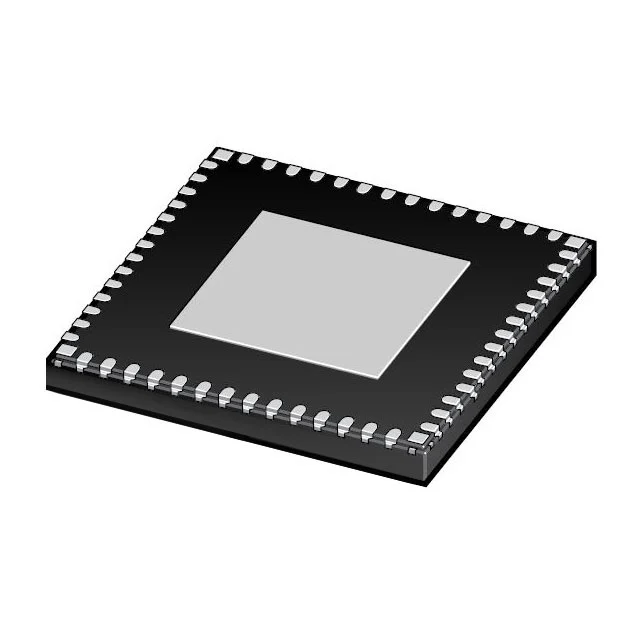
The OTN Framer/Mapper is the silicon engine that bridges client signals (Ethernet, Fibre Channel, SDH/SONET, CPRI) to the OTN transport layer. Implemented as high-density ASICs or FPGAs, modern framer/mapper chips process multiple terabits per second, mapping hundreds of client ports into OTN containers with microsecond-level precision timing. These devices are the unsung workhorses of every OTN line card and transponder in carrier networks.
Key Takeaway: The framer/mapper must handle clock domain crossing between client and line rates that may differ by ±100 ppm. The Generic Mapping Procedure (GMP) uses sigma-delta modulation to interpolate client data into the OTN container with sub-ppm precision — an elegant DSP solution to a fundamental clocking problem.
Mapping Modes: BMP, AMP, and GMP
Three mapping modes are defined by ITU-T. BMP (Bit-synchronous Mapping Procedure) — the simplest — maps a client whose bit rate is derived from the same clock as the OTN line, requiring no justification; used primarily for SDH/SONET. AMP (Asynchronous Mapping Procedure) uses positive/negative justification opportunities (±1 byte per frame) to accommodate clock differences, with justification control (JC) bytes signalling whether the payload byte is data or stuff. GMP (Generic Mapping Procedure) — the most versatile — uses a sigma-delta modulated justification signal computed from the ratio of client to server clock frequencies, with the Cn value (number of client bytes per OTN frame) communicated in the overhead. GMP is mandatory for ODUflex and modern packet clients.
GFP-F: Generic Framing Procedure
For packet clients (Ethernet, IP/MPLS), GFP-F (Frame-mapped Generic Framing Procedure) — ITU-T G.7041 — maps variable-length packets into fixed-size OTN payloads. GFP-F uses: core header (2 bytes PLI + 2 bytes cHEC) indicating payload length, type header (2 bytes PTI/PFI/EXI/UPI + 2 bytes tHEC) identifying client type, optional extension header, and payload with FCS. Idle frames fill unused bandwidth. GFP-F's frame delineation uses a Hunt-Presync-Sync state machine based on PLI/cHEC correlation — a robust mechanism inherited from ATM. For CPRI/eCPRI clients, GFP-T (Transparent) maps constant-bit-rate streams with minimal latency.
ODUflex and G.HAO
ODUflex (flexible ODU) — defined in G.709 — supports arbitrary client bit rates not aligned to the fixed ODUk hierarchy. ODUflex(GFP) for packet clients uses GMP mapping with configurable tributary slot granularity (1.25 Gbps — the ODU0 rate). ODUflex(CBR) for constant-bit-rate clients also uses GMP. G.HAO (Hitless Adjustment of ODUflex) — ITU-T G.7044 — enables increasing or decreasing the number of tributary slots allocated to an ODUflex connection without dropping traffic, using a Link Capacity Adjustment Scheme (LCAS) that coordinates the add/remove of members between source and sink. This is critical for elastic 5G transport services.
Framer/Mapper ASIC Architectures
Modern framer/mapper chips (Broadcom Aethra, Microchip DIGI-G5, Marvell Polaris) integrate: hundreds of SerDes lanes (25G/50G/100G PAM4 NRZ), multi-terabit OTN processing pipelines (ODU0 through ODU4 plus ODUflex), on-chip FEC engines (both hard-decision RS and soft-decision LDPC), packet processing (classification, OAM, timestamping), and SDN control interfaces (NETCONF/YANG, gRPC). A single chip can process 1.6–3.2 Tbps, mapping 64 × 25GE or 16 × 100GE clients into OTN. Power efficiency of ~0.1 W/Gbps is typical for 7 nm/5 nm process technologies.
CPRI/eCPRI Transport over OTN
The framer/mapper plays a critical role in 5G fronthaul transport over OTN. CPRI options 7–10 (10–24 Gbps) are mapped using BMP or GMP into ODU2/ODUflex with strict latency requirements. eCPRI over Ethernet (25GE/50GE) is mapped via GFP-F into ODUflex. The mapper must minimise mapping delay (<10>packet delay variation (PDV) through buffering at the de-mapper. IEEE 1914.3 RoE provides an alternative encapsulation designed specifically for radio transport.
OTN framer/mapper technology continues to advance, with next-generation devices targeting 6.4 Tbps throughput, integrating coherent DSP for direct pluggable optics, and supporting AI-assisted dynamic bandwidth allocation for 5G and beyond.