
Making Robots Move: Joint Drive and Servo Board PCB Solutions
Table of Contents
1. Robotic Motion: From Command to Torque
The graceful motion of a robot arm, the dynamic balance of a biped, the precise grip of a manipulator—all originate from hundreds of coordinated motor control loops executing at kilohertz rates. At the heart of each joint is a servo drive PCB that converts digital torque/position commands into precisely controlled three-phase currents flowing through a brushless DC (BLDC) or permanent magnet synchronous motor (PMSM).
This article examines the PCB technologies that make robotic motion possible: single and multi-axis servo drive boards, the power electronics (MOSFET, GaN, SiC) that switch tens of amperes at tens of kilohertz, the encoder interfaces that track rotor position with arc-second precision, and the real-time communication buses (EtherCAT, CANopen) that synchronize motion across dozens of joints.
2. Single-Axis Servo Drive PCB Architecture
2.1 Functional Blocks
A typical single-axis robot servo drive PCB integrates:
MCU/DSP: 32-bit motor control processor (TI C2000/TMS320F28, ST STM32G4, Infineon XMC, Microchip dsPIC) executing field-oriented control (FOC) at 20-50kHz PWM frequency
3-Phase Inverter: 6× MOSFETs/GaN FETs in a 3-phase bridge configuration
Gate Drivers: Half-bridge gate drivers with bootstrap or isolated supplies for the high-side FETs
Current Sensing: 2 or 3 shunt resistors with precision amplifiers for phase current measurement
Position Feedback: Interfaces for incremental encoder (ABZ), absolute encoder (BiSS-C, SSI, EnDat), or resolver
Communication: EtherCAT, CANopen, or proprietary bus interface to the robot controller
2.2 PCB Layer Stack
A compact servo drive PCB is typically 4-8 layers:
| Layer | Function | Copper |
|---|---|---|
| 1 (Top) | Power components (MOSFETs, gate drivers), connectors | 2-4 oz |
| 2 | GND — continuous ground plane | 1 oz |
| 3 | Signal routing (PWM, encoder, comm) | 1 oz |
| 4 | Power plane (motor DC bus, 24-48V) | 2-4 oz |
| 5 | Signal routing (analog sense, MCU I/O) | 1 oz |
| 6 (Bottom) | MCU, passives, connectors | 1-2 oz |
3. Multi-Axis Servo Controller PCBs
3.1 Integrated Multi-Axis Design
For robots with clustered joints (e.g., a 6-axis robot wrist, a quadruped leg), integrating multiple servo drives onto a single PCB reduces wiring, weight, and cost while improving synchronization. A 3-axis servo controller PCB might feature:
Single MCU/DSP with 3 motor control peripherals: Modern MCUs often include multiple PWM modules and ADC sequencers capable of controlling 2-3 motors simultaneously
Shared DC bus: A common power input with individual phase inverters and current sensing per axis
Isolated communication: A single EtherCAT slave controller serving all axes
3.2 PCB Layout Considerations
Multi-axis designs amplify the standard servo PCB challenges:
Power distribution: The DC bus must supply peak currents for all axes simultaneously; power planes must be sized for the worst-case simultaneous stall condition
Thermal coupling: Multiple power stages in close proximity demand careful thermal design—copper pours for spreading, thermal vias to a backside heatsink, and strategic component placement to avoid hot spots
Signal isolation: High-current switching from one axis must not couple into the sensitive analog front-end of another; physical separation and ground plane partitioning are essential
4. FOC Motor Control & Gate Driver Design
4.1 Gate Drive Loop Optimization
The gate drive loop—from the MCU PWM output, through the gate driver IC, to the MOSFET gate, and back through the source Kelvin connection—must be the tightest loop on the board. Total gate drive loop inductance must be below 5-10nH to achieve clean switching waveforms with minimal ringing:
Gate driver placement: Within 10mm of the MOSFET gate and source pins
Gate resistor: Placed at the MOSFET gate pin, not at the driver output, to dampen oscillations
Kelvin source connection: A dedicated return trace from the MOSFET source pin directly to the gate driver, separate from the power source connection
Bootstrap capacitor: Placed as close as physically possible to the driver IC bootstrap pins (within 3mm)
4.2 Power Loop Layout
The main power switching loop (DC+ → high-side MOSFET → motor phase → low-side MOSFET → DC-) must minimize enclosed area to reduce radiated EMI and parasitic inductance:
DC-link capacitors placed directly adjacent to the MOSFET half-bridge
Phase output trace kept short and wide, with continuous ground reference beneath
Laminated bus bar construction on 4-layer+ boards: DC+ and DC- on adjacent inner layers to cancel magnetic fields
5. GaN & SiC Power Stage Integration
5.1 Why Wide-Bandgap Semiconductors for Robots
Gallium Nitride (GaN) and Silicon Carbide (SiC) FETs offer transformative advantages for robotic servo drives:
Higher switching frequency: GaN enables 100-500kHz PWM (vs. 20-50kHz for Si MOSFETs), reducing current ripple and enabling smaller filter components
Lower losses: Near-zero reverse recovery charge (Qrr) and lower gate charge (Qg) reduce switching losses by 50-80%
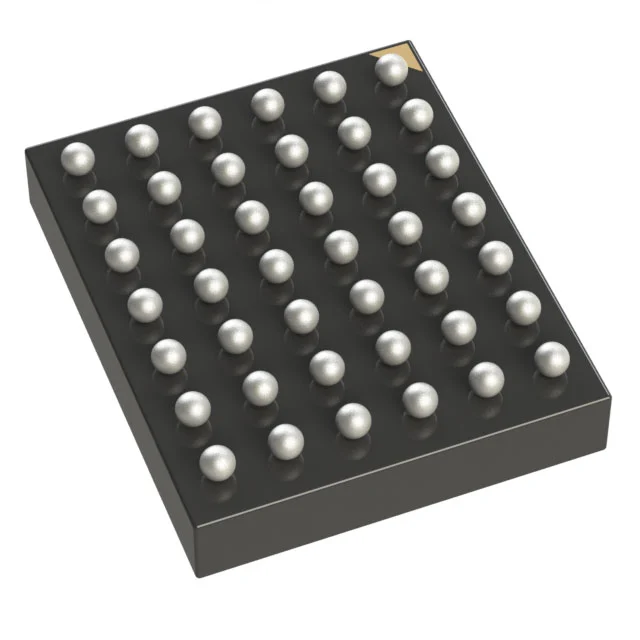
Smaller form factor: GaN FETs in chip-scale packages (e.g., EPC GaN FETs in BGA or LGA) enable extreme miniaturization
5.2 PCB Design for GaN
GaN's high switching speed (dV/dt >100V/ns) creates new PCB challenges:
Ultra-low-inductance layout: The commutation loop must be below 1nH for GaN to avoid excessive voltage overshoot
4-layer minimum: With inner layers dedicated to solid ground and power planes directly adjacent to the GaN FET layer
Kelvin connections: Essential for both gate drive and current sensing; the GaN FET's separate source-sense pin must be used
EMI management: Shield cans over the GaN power stage, ferrite beads on gate drive traces, and RC snubbers for residual ringing
6. Encoder & Position Sensor Interfaces
6.1 Encoder Types & PCB Requirements
| Encoder Type | Interface | Resolution | PCB Considerations |
|---|---|---|---|
| Incremental (ABZ) | RS-422 differential | 1000-50000 CPR | 100Ω diff impedance, ±5 mil length match per pair |
| Absolute BiSS-C | RS-485 (2-wire) | 18-26 bits | 120Ω termination, 10MHz+ clock rate |
| Hall-effect (commutation) | Single-ended digital | 6 steps/rev | Pull-up resistors, RC filtering |
| Resolver | Analog sine/cosine | 12-16 bits (after RDC) | Resolver-to-digital converter (RDC) IC, excitation amplifier |
| Magnetic (AMR/GMR/TMR) | SPI or A/B/Z | 12-18 bits | SPI ≤10cm trace length, 50Ω controlled impedance |
6.2 Resolver Interface PCB
Resolvers remain popular in high-reliability robots due to their robustness. The PCB must generate a sinusoidal excitation signal (typically 7-10kHz, 7Vrms) and process the returned sine/cosine signals:
Excitation amplifier: A power op-amp driving the resolver primary winding, with current limiting and short-circuit protection
Signal conditioning: Differential amplifiers with programmable gain for the sine/cosine inputs, followed by the RDC IC
Shielding: The resolver cable carries both the high-power excitation and the microvolt-level return signals—shielded twisted pairs with careful PCB connector grounding are essential
7. EtherCAT & Real-Time Communication PCBs
7.1 EtherCAT Slave Controller Integration
EtherCAT is the dominant real-time communication protocol for multi-axis robotics, offering sub-microsecond synchronization across hundreds of nodes. A servo drive PCB with EtherCAT integrates:
EtherCAT Slave Controller (ESC): ASIC or FPGA IP (Beckhoff ET1100/ET1200, or integrated into MCU) handling the EtherCAT data link layer
Ethernet PHYs: 2× 100BASE-TX PHYs (for daisy-chain topology), each requiring 50Ω differential impedance for the MDI lines to the RJ45 or M8/M12 connector
Magnetics: Integrated RJ45 connectors with magnetics, or discrete transformer modules on the PCB
Distributed Clocks: The ESC's distributed clock mechanism provides jitter below 100ns between nodes—the PCB's clock routing must preserve this accuracy
7.2 CANopen & Alternative Buses
For lower-cost or lower-node-count robots, CANopen over CAN FD remains popular. The CAN transceiver PCB requires:
120Ω differential impedance with ±5% tolerance
Termination resistors (120Ω) at both ends of the bus; the PCB should include a selectable termination option (jumper or software-controlled)
Common-mode choke on the CAN bus lines for EMC immunity
8. Precision Current Sensing & Feedback
8.1 Current Sensing Architectures
Precise phase current measurement—typically ±0.5% accuracy across the full current range—is essential for smooth torque control. Three architectures dominate:
Shunt + Isolated Amplifier: A low-resistance shunt (1-10mΩ) in each phase leg, with an isolated delta-sigma modulator or amplifier. PCB layout must use Kelvin connections directly at the shunt pads
Shunt + Inline Current Sense Amplifier: For lower voltages, a non-isolated amplifier with common-mode range extending beyond the supply rails (e.g., TI INA240)
Hall-effect Sensor: Galvanically isolated, but with higher noise and offset drift than shunt-based methods; typically reserved for overload protection, not primary control
8.2 Kelvin Connection Routing
The 4-wire Kelvin connection to the shunt resistor is the single most layout-critical net on the servo PCB:
Sense traces must connect directly to the inner edges of the shunt resistor pads
No other current should flow through the sense traces or their vias
Differential routing with tight coupling (5 mil spacing) from the shunt to the amplifier input
9. Thermal Management in Confined Joint Spaces
Robot joints are inherently thermally constrained—the servo PCB is surrounded by the motor, gearbox, and structural housing, with minimal airflow. Thermal strategies include:
Aluminum-core PCB (IMS): The entire servo drive PCB uses an aluminum baseplate that bolts directly to the robot's structural aluminum components, using the robot structure as a heat sink
Thermal gap pads: Between the MOSFETs and the housing, with controlled thickness to ensure consistent thermal contact
Copper coin insertion: Under high-dissipation components (MOSFETs, gate drivers), solid copper coins conduct heat to a backside cold plate
Thermal derating: The MCU firmware monitors MOSFET temperature (via NTC or Rdson measurement) and reduces PWM frequency or current limit at elevated temperatures
10. Direct-Drive & Quasi-Direct-Drive Trends
The trend toward direct-drive and quasi-direct-drive (QDD) actuators—where the motor connects to the load with minimal or no gearing—changes servo PCB requirements:
Higher torque at low speed: Requires higher phase currents (20-50A continuous) and heavy copper PCBs (4-6 oz)
Lower inductance motors: Demanding higher PWM frequencies (50-100kHz) to keep current ripple acceptable; GaN FETs become essential
Integrated torque sensing: Strain gauge amplifiers on the servo PCB for direct torque feedback at the joint output
11. Conclusion
The servo drive PCB at each robot joint is a miniature power electronics masterpiece—converting DC bus power into precisely controlled three-phase AC while tracking rotor position to sub-degree accuracy and communicating over real-time networks with microsecond determinism. The transition to GaN/SiC power semiconductors, direct-drive actuators, and higher-axis-count integrated controllers will push these PCBs toward even greater power density and miniaturization.