
The Brain of Embodied Robots: Main Control Board PCB Technology
Table of Contents
1. The Robot Brain: More Than Just a Computer
An embodied robot's main control board is fundamentally different from a server or even an edge AI board. While all three process data and run inference, the robot brain must do so in real-time, while physically moving through an unpredictable environment, managing hundreds of sensor inputs and actuator outputs with deterministic latency, and fitting within the stringent size, weight, and power (SWaP) constraints of a mobile platform. A robot that hesitates for 100ms while computing its next joint trajectory has already stumbled.
This article dissects the main control board PCB—the "brain"—of a modern embodied robot, from the AI SoC that perceives the environment to the real-time co-processor that closes control loops at kilohertz rates. We examine the architectural decisions, PCB design techniques, and manufacturing challenges that make a robot brain board successful.
2. Main Control Board System Architecture
2.1 Heterogeneous Compute Architecture
A modern embodied robot main controller implements a heterogeneous compute architecture with distinct processing domains:
AI inference engine: GPU/NPU for perception (object detection, SLAM, gesture recognition), typically 20-275 TOPS (NVIDIA Jetson Orin series, Qualcomm RB6)
Vision pipeline: ISP (Image Signal Processor) and video encoders for multi-camera processing
Real-time control processor: Arm Cortex-R or Cortex-M MCU (or FPGA soft core) executing motor control loops, safety monitoring, and low-latency sensor acquisition
Safety processor: Independent MCU monitoring system health, implementing watchdog, and managing safe-state transitions
2.2 Typical Board Specifications
| Parameter | Typical Range | Notes |
|---|---|---|
| PCB size | 80mm×80mm to 150mm×200mm | Varies from compact quadruped to full-size humanoid |
| Layer count | 12-20 layers | HDI 2-3-2 or 3-4-3 build-up typical |
| AI compute | 20-275 TOPS | NVIDIA Orin NX/Nano to AGX Orin |
| Memory | 8-64GB LPDDR5/x | PoP or discrete, depending on SoC |
| Storage | 64-512GB eMMC/UFS + NVMe SSD | |
| Sensor I/O | 6-12 MIPI CSI camera lanes, multiple SPI/I2C | Cameras, IMU, ToF, LIDAR via Ethernet/USB |
| Power | 15-60W typical | Varies with workload |
3. SoC Selection & Compute Platform Options
3.1 Platform Comparison
| Platform | AI TOPS | Power (W) | Memory | Best For |
|---|---|---|---|---|
| NVIDIA Jetson Orin Nano | 20-40 | 7-15 | 4-8GB LPDDR5 | Consumer/service robots |
| NVIDIA Jetson Orin NX | 70-100 | 10-25 | 8-16GB LPDDR5 | Mid-range AMR, quadrupeds |
| NVIDIA Jetson AGX Orin | 200-275 | 15-60 | 32-64GB LPDDR5 | Humanoid, high-end manipulation |
| Qualcomm RB6/RB5 | 15-200 | 8-30 | 8-16GB LPDDR5 | Lower-power, integrated 5G |
| Intel Agilex 7 FPGA | Custom | 10-40 | DDR4/DDR5 | Custom inference, low-latency control |
| Custom ASIC/SoC | Variable | Variable | HBM/LPDDR | High-volume robots, optimized for specific workloads |
3.2 PCB Implications of SoC Choice
The SoC choice drives much of the PCB architecture. NVIDIA Jetson modules simplify design by pre-integrating the SoC, memory, and PMIC on a module—the main board becomes a carrier. Custom SoC designs require the full complexity: BGA breakout, memory routing, PMIC placement, and signal integrity simulation—but enable size and cost optimization at scale.
4. High-Speed Memory Routing (LPDDR5/GDDR6)
4.1 LPDDR5/x Routing
LPDDR5/x at 6400-8533 MT/s demands meticulous PCB routing on the main control board:
DQ byte lanes: Matched to ±5 mils within a byte, ±25 mils across bytes
DQS differential strobes: 80Ω differential impedance, matched to ±2 mils within the pair
Command/Address: 40Ω single-ended (ODT to VDDQ/2), fly-by topology for multi-rank configurations
Reference plane: Continuous, unbroken ground plane on the adjacent layer; no splits under the memory routing zone
Via count: Minimize—ideally 2 vias or fewer per net (SoC pad → via → memory pad); every via adds capacitance and stub resonance
4.2 PoP vs. Discrete Memory
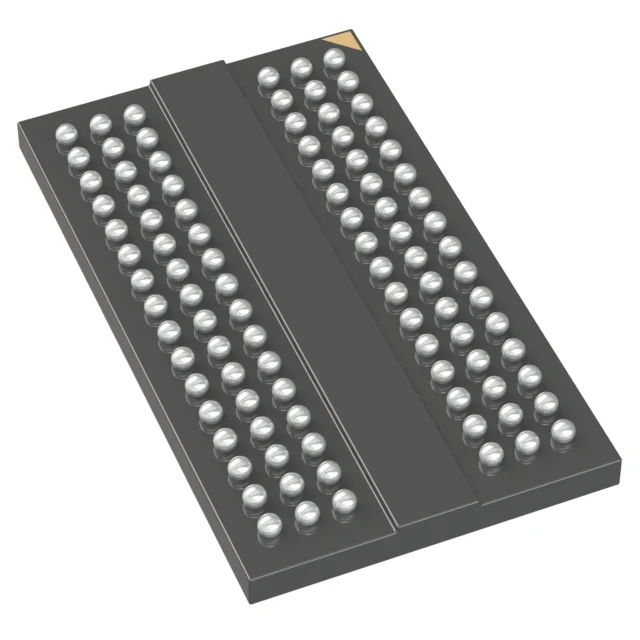
Many embedded SoCs (Jetson Orin, Qualcomm QCS8550) use Package-on-Package (PoP) memory, where the LPDDR5 is stacked directly on the SoC. This eliminates the memory bus routing from the PCB entirely, dramatically simplifying the board. However, for higher memory capacity (32GB+) or GDDR6, discrete memory ICs are required, demanding the full suite of high-speed routing techniques.
5. Real-Time Control Co-Processor Integration
5.1 The Dual-Compute Paradigm
A fundamental architectural decision for robot main boards is whether to run all control loops on the primary AI SoC or use a separate real-time co-processor. Best practice for professional robots is the dual-compute paradigm:
AI SoC (Linux/ROS): Handles perception, planning, navigation, and user interaction—non-deterministic, high-latency (1-50ms), high throughput
Real-time MCU (bare-metal/RTOS): Handles motor control loops (1-20kHz), servo communication (EtherCAT/CANopen), sensor acquisition, and safety monitoring—deterministic, low-latency (10-100μs)
5.2 Inter-Processor Communication PCB Design
The high-speed link between the AI SoC and the real-time MCU is critical. Common interfaces and their PCB requirements:
PCIe Gen3/4 x1-x4: 85Ω differential, 8 GT/s per lane, AC coupling capacitors near the transmitter
SPI (Quad SPI at 100MHz+): Length-matched to ±10 mils, 50Ω single-ended
USB 3.2: 90Ω differential for SuperSpeed pairs
Ethernet (RGMII/SGMII): 50Ω single-ended, delay-matched clock and data traces
6. Multi-Modal Sensor Hub & I/O Aggregation
6.1 Sensor Interface Types
The main control board serves as a sensor hub, aggregating diverse data streams:
MIPI CSI-2 cameras: 4-8 lanes at 2.5 Gbps each, requiring 100Ω differential impedance
IMU (Inertial Measurement Unit): SPI or I2C interface, often with dedicated interrupt line for data-ready signaling
Time-of-Flight / Depth sensors: MIPI CSI or USB 3.0 interface
LIDAR: Ethernet (100BASE-T/1000BASE-T) or USB 3.0
Microphone array: I2S/TDM with 4-8 channels, requiring clean analog and digital power domains
6.2 Clock Distribution & Synchronization
Multi-sensor fusion requires precise time synchronization. The main board must distribute a common clock reference and implement hardware timestamping:
Low-jitter PLL clock generator IC feeding all sensor interfaces
PTP (Precision Time Protocol) over Ethernet, with hardware timestamping support in the Ethernet PHY
External trigger synchronization via GPIO with sub-microsecond accuracy
7. HDI Stackup & BGA Breakout Strategies
7.1 Typical HDI Build-Up
A 16-layer robot main control board stackup:
| Layer Group | Layers | Type | Via Technology |
|---|---|---|---|
| Top build-up | L1-L3 | Signal + GND | Laser microvias (100μm) |
| Core signal | L4-L7 | Signal routing | Buried vias (150-200μm) |
| Power planes | L8-L9 | Power distribution | PTH / buried vias |
| Core signal | L10-L13 | Signal routing | Buried vias (150-200μm) |
| Bottom build-up | L14-L16 | Signal + GND | Laser microvias (100μm) |
7.2 BGA Breakout Techniques
The AI SoC's BGA (0.5-0.65mm pitch for Jetson Orin, 0.4mm for mobile SoCs) requires advanced breakout:
Via-in-pad: Filled and planarized microvias for the outer rows
Skip vias: Laser microvias from L1 to L3, bypassing L2 for additional routing channels
Dog-bone fanout: For inner rows where via-in-pad is impractical
Staggered via pattern: Alternatives to stacked vias for improved reliability in mobile/robotic applications subject to vibration
8. Miniaturization & Form Factor Constraints
8.1 SWaP Constraints by Robot Type
| Robot Type | Typical Board Size | Weight Budget | Power Budget |
|---|---|---|---|
| Quadruped (Unitree Go2) | 100 × 80 mm | <200g> | <30w<> |
| Humanoid (Tesla Optimus) | 150 × 120 mm (multiple boards) | <500g per="" board=""> | <75w per="" board=""> |
| AMR (Autonomous Mobile Robot) | 170 × 170 mm (Mini-ITX) | <500g<> | <60w<> |
| Robotic arm controller | 120 × 100 mm | <300g<> | <40w<> |
8.2 Space-Saving Techniques
Component placement on both sides: Passive components and connectors on the bottom
Rigid-flex construction: Rigid main board with flex tails for connectors, enabling 3D packaging
Embedded passives: Resistors and capacitors embedded within the PCB stackup, saving surface area
Module-based design: SoM + carrier approach for faster development, custom single-board for volume production
9. Mechanical Reliability for Mobile Robots
Unlike stationary computing, robot main boards experience continuous vibration, occasional shock (drops, collisions), and repeated thermal cycling. PCB reliability measures include:
Underfill on large BGAs: Epoxy underfill on the SoC and memory BGAs to distribute stress and prevent solder joint fatigue
Staking of heavy components: Inductors and electrolytic capacitors secured with silicone adhesive
Connector reinforcement: Through-hole anchors on high-cycle connectors
Conformal coating: For robots operating in outdoor or humid environments
Vibration testing: 5-15G RMS random vibration (10-2000Hz) per IEC 60068-2-64
10. On-Robot LLMs & Neuromorphic Computing
The next generation of robot brains will run increasingly large models directly on-device. Trends include:
Quantized VLMs (Vision-Language Models): Running at interactive rates on 40-100 TOPS platforms, requiring increased memory bandwidth
Neuromorphic processors: Event-based computing (e.g., Intel Loihi 2, SynSense Speck) for ultra-low-power perception—interfacing via SPI to the main SoC
On-device training/fine-tuning: Edge learning requiring GDDR6/HBM memory bandwidths and sustained thermal management
11. Conclusion
The main control board of an embodied robot is arguably the most demanding single-board computer design in the embedded world—combining AI-class compute density, real-time control determinism, multi-modal sensor integration, and mobile-form-factor reliability. Success requires a holistic approach to PCB design that considers not just signal integrity and power delivery, but also thermals during sustained inference, vibration resistance, and the system-level interplay between the AI and real-time compute domains.